Home › Commercial Concrete Foundations and Footings
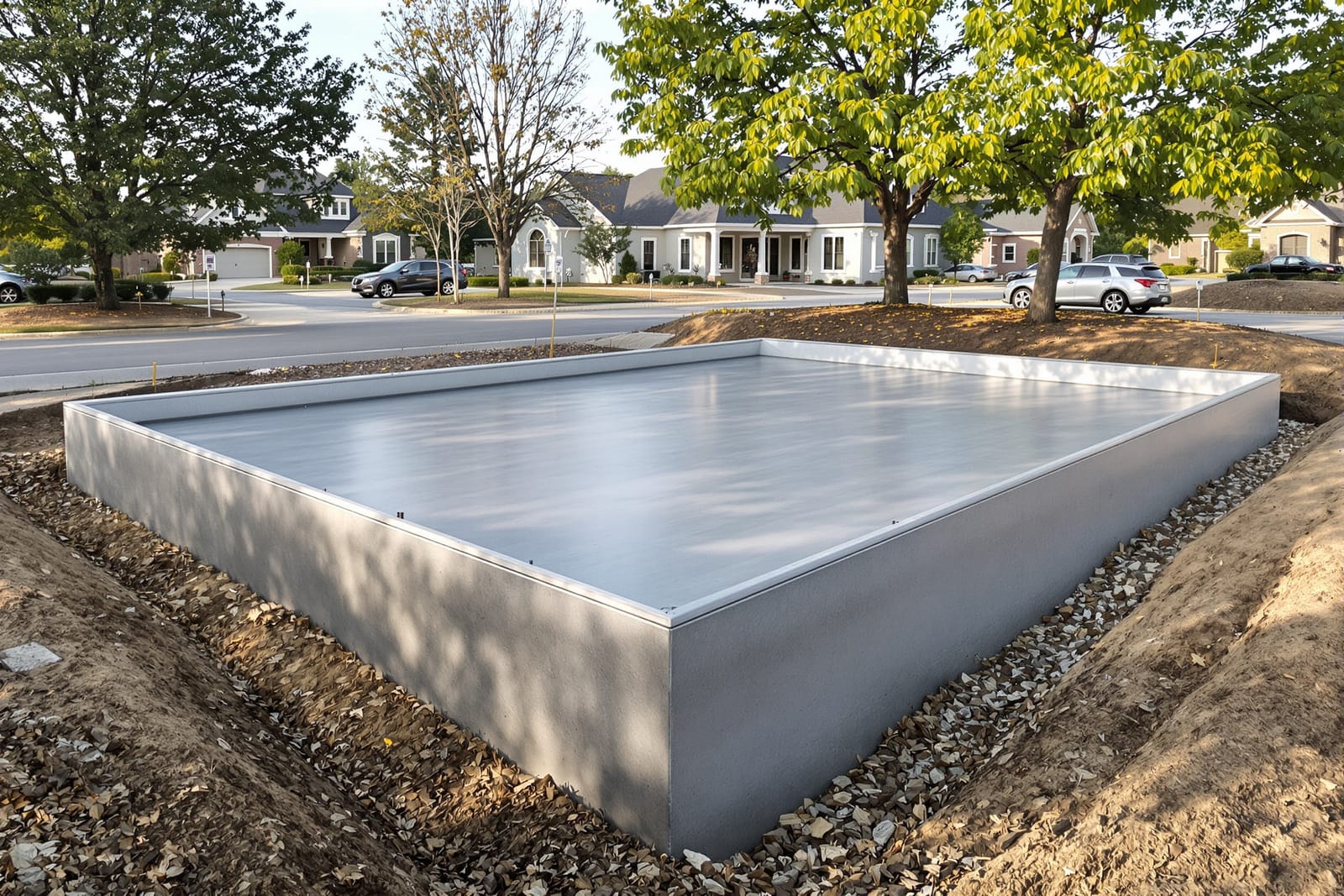
We construct commercial concrete foundations and footings for projects throughout Leesburg, VA. Our team works from engineered plans to install spread footings, grade beams, foundation walls, and piers that meet structural requirements. Accurate layout, rebar placement, and pour scheduling keep your building project on schedule.
Leesburg Concrete Company provides professional commercial concrete foundations throughout Leesburg, VA, Virginia and the surrounding area. Our licensed, insured crew delivers safe, clean, on-time work with a free estimate before anything begins. Call (571) 601-2614 or request your free quote.
Commercial Concrete Foundations in Leesburg, VA
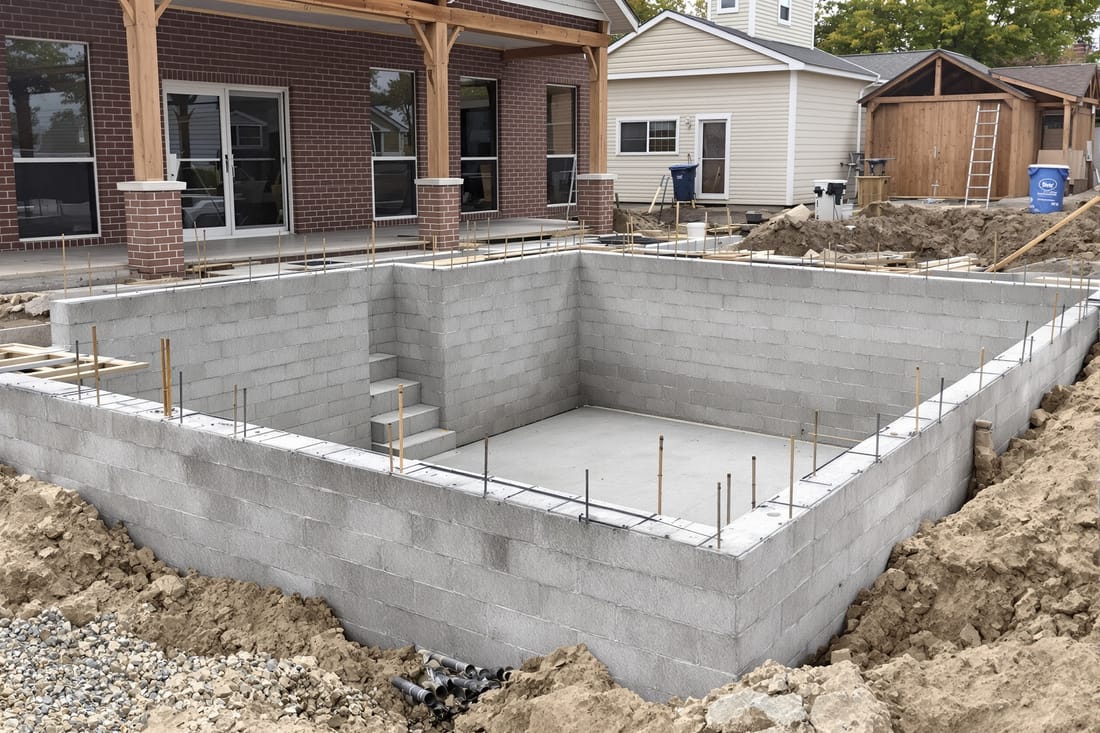
Commercial concrete foundations in Leesburg are not one-size-fits-all. Leesburg Concrete Company designs and installs foundations that match the building load, soil conditions, and local code requirements in Loudoun County. Before we talk about thickness or rebar, we look at what the structure will support: office, retail, warehouse, light industrial, or mixed-use.
In Northern Virginia, most commercial work uses reinforced concrete spread footings with stem walls or full mat slabs for heavier loads. We coordinate with your architect and structural engineer to interpret the plans, verify load paths, and adjust details in the field when actual conditions do not match the original soils assumptions.
Leesburg’s freeze-thaw cycles, hilly terrain, and variable clay content mean footing depth and drainage are critical. We typically set footing bottoms at or below the local frost line, then address groundwater and surface runoff so your foundation is not sitting in water. The goal is straightforward: a foundation that carries the load, stays dry, and does not move.
Site Evaluation, Soils, and Layout
Solid commercial concrete foundations start with a realistic understanding of the ground you are building on. Leesburg Concrete Company begins with a site walk, plan review, and coordination with your geotechnical report if one exists. In much of Leesburg, you will encounter clayey soils mixed with rock, and those conditions directly affect footing width, bearing capacity, and excavation methods.
If the existing soils report is older or the site conditions have clearly changed, we will recommend spot verification, such as test pits or proof rolling, before we commit to final footing sizes and excavation costs. Discovering soft pockets, organics, or uncontrolled fill during excavation is common, and addressing those areas early prevents settlement problems later.
Once the site and soils are confirmed, we establish control points and building corners with survey data, then snap lines for footing locations. On commercial projects this layout must also account for column locations, plumbing penetrations, and any equipment pads. A few hours spent getting layout exactly right can prevent weeks of problems with misaligned anchor bolts, columns that do not match steel shop drawings, or grade beams that miss utility chases.
Excavation, Forms, and Reinforcement
Excavation for commercial concrete foundations in Leesburg is often more involved than for residential work. We use machine sizes that match your access and volume needs, from compact excavators for tight in-town sites to larger equipment for pad sites along Route 7 or the Dulles Greenway corridors. We cut to design elevation, then over-dig where necessary for structural fill or to remove unsuitable soil.
Footing bottoms are checked for bearing capacity and proper elevation. If we encounter wet or pumping soils, we may install a mud slab or use stone and geotextile to stabilize the base before forming. This is a typical issue near low-lying or previously disturbed sites and must be addressed before placing reinforcement.
Formwork is built to match your engineer’s details: footing widths, keyways, stem wall heights, and step transitions along slopes. For large commercial jobs, we often use gang forms to improve speed and consistency. Reinforcing steel (rebar) is then cut, bent, and tied according to the structural drawings, including dowels for walls and columns, continuous bars in grade beams, and additional reinforcement at re-entrant corners and openings. We maintain proper cover with chairs and spacers, which is essential in our climate where deicing salts in parking areas can reach concrete surfaces over time.
Concrete Placement, Weather, and Curing
Leesburg Concrete Company works with local ready-mix suppliers to select the correct mix design for commercial concrete foundations. Typical specs call for 3,000 to 5,000 psi concrete with air entrainment, specific slump ranges, and sometimes corrosion inhibitors depending on exposure. For equipment pads, heavy column loads, or special-use areas, higher strengths or additives may be required, which we coordinate with your engineer.
Timing of placement matters. In Leesburg, the most predictable months for foundation work are usually March through early June and September through early November. Summer heat can cause rapid set and shrinkage cracking, so we may adjust pour times to early morning, reduce water content, or use set-control admixtures. In winter, we schedule around cold snaps, use blankets, and sometimes use heated water or accelerators to protect against freezing during the first 24 to 48 hours.
During the pour, we use internal vibrators to consolidate the concrete and eliminate voids around rebar and anchor bolts. After placement, we strike off, bull float as needed, and then implement curing methods that match the project: curing compound spray, wet coverings, or a combination. Proper curing significantly increases strength and reduces surface cracking, which matters if your foundation doubles as a finished slab area, such as in retail or warehouse spaces.
Cost Drivers, Scheduling, and Common Issues
The cost of commercial concrete foundations in Leesburg is driven by more than just the price per cubic yard of concrete. Major factors include excavation depth, soil conditions, reinforcement quantity, foundation type (spread footings, mat slab, grade beams, or a combination), and site access for trucks and equipment. Rock removal, poor soils, or significant dewatering needs can add line items, so it is important to address these risks clearly in your preconstruction discussions.
Leesburg Concrete Company builds schedules around inspections, other trades, and your critical path. Concrete work is tied to footing inspections, underground plumbing and electrical rough-ins, and steel or precast delivery. We help sequence pours so that follow-on trades are not delayed, for example, by staging separate pours for core areas, elevator pits, or mechanical rooms that have early equipment installation dates.
Common issues we solve in the field include mismatched anchor bolt templates, elevation discrepancies between drawings and existing grades, and conflicts between foundation elements and underground utilities. Instead of stopping the job, we bring these problems to your design team with practical options, such as adjusting pier heights, thickening localized slab areas, or rerouting non-critical conduits. The goal is to keep your project moving without compromising structural integrity or code compliance.
What Leesburg Owners and GCs Should Know Before Hiring
Before you hire a contractor for commercial concrete foundations and footings, it helps to understand how your project type and location affect the work. Sites near historic downtown Leesburg often have tighter access, more utility conflicts, and stricter noise and work-hour limits than greenfield sites along major corridors. That affects how we schedule pours, where trucks can stage, and which pumping methods we use.
Ask any contractor how they coordinate with engineers and inspectors, how they document reinforcement and embed placements, and how they deal with weather interruptions. Leesburg Concrete Company provides pour logs, delivery tickets, and inspection sign-offs, and we communicate early about any adjustments that might affect schedules or follow-on trades.
You should also clarify responsibility for layout, anchor bolt placement, and embeds for steel and mechanical systems. On many commercial jobs, a small error at the foundation stage becomes a major alignment problem later. We treat layout and embeds as critical tasks and invite your steel and MEP teams to review placements before pours when practical.
Finally, make sure your contractor understands local conditions. In Leesburg and the larger Loudoun County area, frost depth, clay content, and stormwater requirements are not theoretical. They drive footing depth, drainage design, and slab details. A properly built foundation is not the cheapest line on your budget, but it is the one that supports every other dollar you spend on the building above it.